When CTUG’s founders thru-hiked the Pacific Crest Trail in 2018, their water setup started with safety pins. A pillow sack pinned to a shoulder strap kept a bottle up front where it could be reached easily. They were over side pockets, which meant reaching back for every sip. And a water bladder had worked fine right up until it popped and soaked everything in the pack.
That pinned-on pillow sack eventually turned into one of CTUG’s first products. The bigger lesson from the desert wasn’t about one piece of gear, though. The best way to carry water while hiking through dry country is to give your water different jobs. One bottle rides on your shoulder strap, and you drink from it while walking. Reserve bottles ride in your side pockets or inside your pack and refill the front bottle at breaks. This guide covers how to size that system, where each liter should go, and what else deserves a spot within arm’s reach.
Capacity and Access Are Two Separate Problems
Most hikers plan capacity carefully. They count miles, check the water report, and buy enough bottles. Access usually gets ignored until they’re two hours into a hot afternoon and realize they’ve barely touched the water on their back.
The reason is pretty simple. If drinking means stopping, taking your pack off, or doing the awkward over-the-shoulder reach, you’ll drink less often than you should. This isn’t exclusive to desert hikes, the same thing can happen on a casual day hike.
In the desert, water you carry but don’t drink is just weight. Solving access is what gets you sipping on a steady schedule, and that’s the whole reason you hauled it.
Do the Water Math Before You Pack Anything
Start with distance, not bottles. Look at the mileage between reliable sources, then factor in your pace, the forecast, and whether you’ll be dry camping.
On the PCT, the Pacific Crest Trail Association notes that most northbound hikers need at least six liters in their pack when they leave the Southern Terminus, and it tells hikers to study their maps and the PCT Water Report first. Our own rule of thumb is that a 20-mile desert stretch can call for something like a five-liter carry.
Heat becomes a factor fast. The National Park Service’s hiking safety guidance for Saguaro National Park recommends about a quart of water per hour of hiking on hot, dry days, plus electrolytes. For day hikes, it also suggests turning back once half your supply is gone. Cooler weather doesn’t necessarily mean these suggestions don’t apply. The National Park Service still recommends at least two quarts per day in winter, which is worth remembering if you’re squeezing in desert day hikes this winter..

Assign Every Bottle a Job
This is where a lot of setups go sideways. Rather than cramming your bottle anywhere it fits, we have found it works better to give each bottle a role and keep it there.
The Drinking Bottle Rides Up Front
One bottle lives on your shoulder strap, and it’s the only one you drink from while walking. It sits right at chest height, so you can grab it with one hand, take a few sips, and drop it back in without breaking stride, even with trekking poles in your other hand.
Reserve Bottles Ride in the Side Pockets and Pack
Everything else is reserve water. When the front bottle runs dry, you stop at a natural break, pull a reserve, and refill or swap. Our team keeps a Smart Water bottle or two inside their pack for exactly this reason. Refilling becomes a quick routine a few times a day instead of a constant scramble.
There’s an additional benefit on any hike, desert or not. Moving one bottle to your strap frees up a side pocket. Plenty of hikers use that open pocket for their tent and still keep around three liters of capacity between the other side pocket and the front bottle.
You don’t need instant access to every liter you carry, only to the one you’re drinking from. Once you see it that way, a single strap bottle plus well-placed reserves makes more sense than trying to make all your water reachable at once.
Electrolytes, Maps, and the Other Things You Reach For
Water isn’t the only thing you’ll want without stopping in dry country.
Electrolytes matter about as much as the water itself in heat. The NPS recommends sports drinks or salty snacks, because sweating costs you sodium along with water. If you mix electrolyte powder into your bottles, keep the packets somewhere you can reach without digging. Bottles are also much easier to rinse after sugary drink mix than a bladder is, one of the reasons CTUG laid out the tradeoffs of water bottle sleeves versus hydration bladders in an earlier post.
Your phone is the other big one. A lot of hikers lean on their phone for maps and water info, and in the desert you’ll check both constantly. With your phone on your strap, it’s quick to grab the map or snap a photo, and it isn’t jingling around in a back pocket.
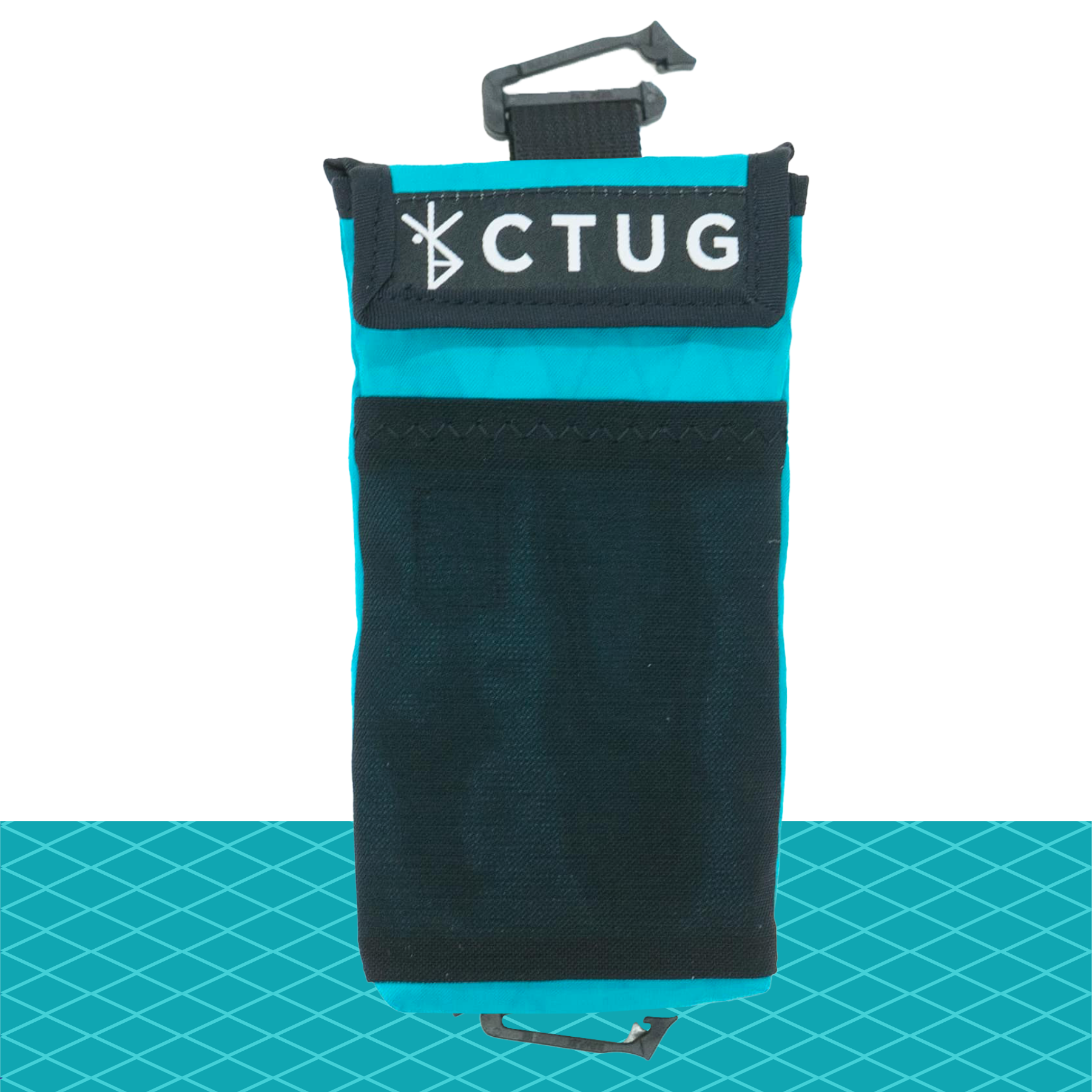
A shoulder strap phone pocket keeps your phone in the same easy-reach zone as your water. A velcro flap gives you quick access, and a stretchy mesh outer pocket holds a snack bar or sunglasses. If you’d like more protection from dust and weather, a zipper pocket for your shoulder strap uses a water-resistant zipper and fits a phone, GPS, or snacks. A common pairing is a bottle sleeve on one strap and a pocket on the other, which puts water, map, and food all within reach.

Building a Desert-Access Setup on Your Shoulder Straps
In the desert, your front bottle stays full and heavy for long stretches, so the attachment matters. Our sleeve clips on at two points and cinches tight, so it stays put instead of swaying. Most backpacking packs have gear loops or a daisy chain on the straps to clip onto. Some simple day packs don’t, so check yours first.
For sizing, start with the bottle you already use. Then check the bottles and sizes guide to find the sleeve that fits it.
If the fit feels off, don’t be afraid to fiddle. Most setups are one adjustment away from working, like moving the lower clip to drop the sleeve down the strap. The clips take a specific pinch to open and close, and once you learn it, they won’t shake loose. The setup videos on the product page walk through all of it, and our customer service team is happy to help if you’re still stuck.
Before you head out, test the whole setup with full bottles on a local hike. It’s a lot easier to make adjustments at a trailhead than 15 miles from the next water.
A Desert Water Carry Checklist
-
Distance between reliable sources, checked against a current water report
-
Enough capacity for your longest stretch, plus extra for dry camps
-
One drinking bottle on your shoulder strap
-
Reserve bottles in your side pockets or pack
-
A spare empty bottle
-
Electrolytes or salty snacks within reach
-
Phone or map on your strap
-
Full setup tested on a shorter hike
Frequently Asked Questions
What is the best way to carry water while hiking in the desert?
Split it up. Keep one bottle on your shoulder strap to drink from while you walk, and carry the rest as reserves in your side pockets or inside your pack. Refill the front bottle from your reserves at breaks. You keep the capacity you need for long stretches without making every sip a stop.
How much water do you need for the PCT desert section?
It depends on the stretch, the heat, and your pace. The PCTA says most northbound hikers need at least six liters when they leave the Southern Terminus, and some gaps between sources call for more. Check the water report, plan around your longest stretch, and add extra for dry camps.
How do you carry a water bottle while hiking so you can reach it?
Move it to your shoulder strap. A strap-mounted bottle holder clips onto the gear loops or daisy chain on most backpacking packs and keeps the bottle at chest height. You can drink and put it back with one hand, no chicken wing required.
Do shoulder strap water bottle holders bounce?
They can if the attachment is loose. A holder that clips at two points and cinches tight to the strap should stay steady even with a full bottle. If yours still moves around, adjust how high it sits or how tight the webbing is before giving up on it.
Will a shoulder strap bottle holder fit my backpack?
Most likely, if it’s a backpacking pack. Nearly all of them have gear loops or a daisy chain on the shoulder straps. Some minimal day packs skip those attachment points, so check yours before ordering.
How do you clean a reused Smart Water bottle on trail?
Denture tablets work well. Drop one in with water, let it sit, and rinse. Austin recommends them over specialty bottle cleaners because they do the same job for less, which helps when you’re keeping the same bottles going for hundreds of miles.
Carry More, Stop Less
Austin built the first CTUG sleeve because a pillow sack and a few safety pins worked better than anything he could buy for the job. The thinking behind it is the same one that gets people through dry stretches. Capacity gets you to the next source, and access keeps you drinking along the way. Plan both, give every bottle a job, and keep the stuff you reach for most right on your straps.
If you’re putting together a desert setup for a spring hike, or just tired of asking a friend to grab your bottle, start with a sleeve on one strap and a pocket on the other. If it isn’t working right away, fiddle with it. If it still isn’t working, email CTUG and they’ll help you sort it out.